How Nike is Using AI: Strategy, Tools & Real Examples
Sohel
May 15, 2026
9 min read
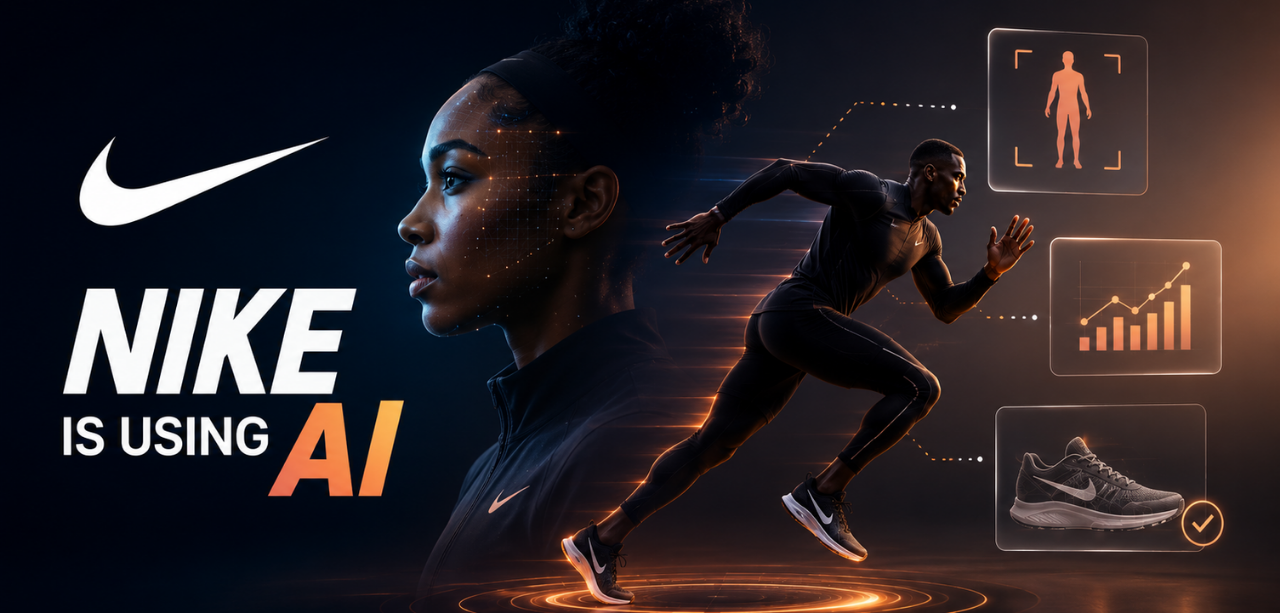
Artificial intelligence isn’t just changing tech companies; it’s quietly transforming the clothes on your back and the shoes on your feet. From how products are designed to how they land on your doorstep, AI is reshaping the entire retail and fashion industry. And few brands are moving faster or smarter than Nike.
Nike AI is no longer a buzzword in a boardroom presentation. It’s a full-scale strategic investment that touches product development, customer personalization, supply chain logistics, and beyond. For marketers, business owners, sneaker enthusiasts, and anyone curious about where retail is headed, understanding Nike’s AI strategy offers a fascinating window into the future of global commerce.
In this article, you’ll learn exactly how Nike is using artificial intelligence, the tools and data systems behind it, real-world examples, and how it stacks up against rival Adidas.
Nike’s digital transformation didn’t happen overnight. It began quietly around 2018 and accelerated rapidly as the company realized that data — not just design — would define the next era of sportswear.
At the core of Nike’s AI strategy is a simple but powerful idea: know the customer better than they know themselves. Nike collects enormous amounts of data through its apps, website, membership program, and retail stores. AI helps make sense of all that data and turn it into action.
To build this capability, Nike made several bold acquisitions:
These weren’t random purchases. Each acquisition was a deliberate building block in Nike’s broader AI and data infrastructure.
Today, Nike uses artificial intelligence across three core pillars:
The result? Nike has become as much a technology company as a sports apparel brand.
How does a shoe go from idea to shelf? At Nike, increasingly, AI plays a major role in that journey.
Nike uses machine learning models to analyze athlete performance data — collected from sensors, wearables, and testing labs — to inform product design. Instead of guessing what a runner or basketball player needs, Nike can now identify micro-patterns in movement, pressure, and fatigue to engineer better-performing shoes.
The Nike Fit feature is a standout example of AI in product design. Using a smartphone camera and computer vision, Nike Fit scans your foot and recommends the right shoe size with remarkable accuracy. The result: fewer returns, better customer satisfaction, and a mountain of biometric data that helps Nike understand how real feet interact with its products.
On the sustainability front, AI is helping Nike reduce material waste by optimizing cutting patterns in manufacturing and predicting which materials will perform best under specific conditions. The brand’s Move to Zero initiative increasingly leans on data-driven insights to meet its environmental goals.
Nike also uses consumer insight data to decide which colorways, styles, and silhouettes to bring to market — reducing the guesswork that traditionally led to overproduction and clearance-rack pile-ups.
If you’ve used the Nike app recently, you’ve already experienced Nike AI at work — you just might not have noticed.
Nike’s membership ecosystem (Nike Member, NikePlus) sits at the heart of its personalization engine. When you browse, buy, or interact with the Nike app, that behavior feeds machine learning models that build a profile of your preferences, size, sport, price sensitivity, and shopping habits.
Here’s what that looks like in practice:
Nike’s AI doesn’t just react — it predicts. Using predictive modeling, the platform can anticipate what you might want next, sometimes before you search for it. This kind of hyper-relevant experience keeps users inside the Nike ecosystem longer and converts browsers into buyers.
The scale of this effort is significant. Nike has over160 million members in its digital ecosystem, generating a constant stream of behavioral data that continuously sharpens its AI models.
Behind every successful product launch is a supply chain that works. And Nike’s machine learning has made that supply chain significantly smarter.
Before AI, demand forecasting in retail was largely guesswork informed by historical sales data. Nike’s acquisition of Celect changed that. Celect’s probabilistic demand models allow Nike to predict which products will sell, where, and in what quantities — down to specific store locations.
This has tangible business benefits:
Nike also uses AI in its distribution centers to streamline warehouse operations, including automated picking systems and route optimization for delivery networks.
The downstream effect is real: Nike’s direct-to-consumer business has grown substantially, and AI-driven supply chain efficiency is a key reason why margins have held even as the company invests heavily in technology.
It’s the rivalry that never ends — on the court and in the cloud. Here’s how Nike and Adidas compare when it comes to artificial intelligence:
| Area | Nike | Adidas |
|---|---|---|
| AI Strategy | Deep, acquisition-driven, data-first | Strong but more partnership-based |
| Personalization | Advanced — 160M+ member ecosystem | Growing — Confirmed app, loyalty program |
| Supply Chain AI | Highly sophisticated (Celect, Datalogue) | Solid, with a focus on sustainability |
| Product Design AI | Nike Fit, performance analytics | Futurecraft (3D printing + AI materials) |
| Mobile Ecosystem | NTC, NRC, SNKRS app — deeply integrated | Adidas Running, Training apps — improving |
| Retail Tech | Nike House of Innovation, AI-powered stores | Speed factories, smart retail pilots |
Where Nike leads: The depth of Nike’s member data and the sophistication of its personalization engine is hard to match. The company has invested more aggressively in data science infrastructure through direct acquisitions.
Where Adidas holds its own: Adidas has made genuinely impressive moves in AI-assisted manufacturing, particularly through its Futurecraft line, which uses generative design and 3D printing to create performance materials. Its sustainability-focused AI initiatives are also notable.
The honest verdict: Nike currently has the edge in consumer-facing AI — personalization, apps, and retail experience. Adidas is competitive in AI-driven product innovation and manufacturing. Neither brand is standing still, and the gap is narrowing.
The next chapter of Nike AI is being written right now — and it’s ambitious.
Generative AI is already making its way into Nike’s design workflow, allowing designers to rapidly prototype colorways, patterns, and silhouettes using text prompts and image generation tools. This dramatically speeds up the creative cycle.
Virtual try-ons powered by augmented reality are becoming more sophisticated. Expect Nike’s apps to let you visualize shoes on your feet before purchasing — reducing returns and increasing confidence at checkout.
AI shopping assistants will likely become conversational, helping customers find the right gear for a marathon, a specific climate, or a particular playing style through natural language interaction.
Looking toward 2030, Nike could plausibly offer:
That said, with greater data collection comes greater responsibility. Nike will face increasing scrutiny around data privacy , algorithmic bias in product recommendations, and the ethical use of biometric information. How the company navigates those concerns will be as important as the technology itself.
Nike’s AI transformation is one of the most comprehensive in global retail. From the moment a product is conceived in a design lab to the second it’s delivered to your door, artificial intelligence is embedded in the process. Nike isn’t just selling shoes — it’s building a data-powered ecosystem designed to anticipate, adapt, and personalize at scale.
For businesses of all sizes, Nike’s strategy offers a clear lesson: data is infrastructure. The brands that invest in understanding their customers deeply — and use AI to act on that understanding — will define the next decade of retail.
As AI continues to evolve, the sportswear and fashion industry will look increasingly different. Nike is positioning itself to lead that change. Whether you’re a marketer, a business owner, or just someone who loves a fresh pair of sneakers, the future of what you wear is being shaped by algorithms as much as by athletes.
Q1: What is Nike AI, and why does it matter? Ans: Nike AI refers to the artificial intelligence technologies and strategies Nike uses across product design, personalization, supply chain, and retail. It matters because it allows Nike to deliver better products, smarter shopping experiences, and more efficient operations — giving the brand a significant competitive advantage.
Q2: How does Nike use artificial intelligence in its apps? Ans: Nike uses AI in apps like Nike Training Club, Nike Run Club, and the main Nike Shopping app to deliver personalized workout plans, product recommendations, and tailored push notifications based on each user’s behavior, fitness data, and purchase history.
Q3: What companies has Nike acquired for AI capabilities? Ans: Nike has made several strategic AI-related acquisitions, including Zodiac (consumer analytics), Celect (predictive demand forecasting), and Datalogue (data integration). These acquisitions form the backbone of Nike’s machine learning and data science infrastructure.
Q4: How does Nike AI compare to Adidas AI? Ans: Nike leads in consumer-facing AI, particularly personalization and its digital member ecosystem. Adidas is competitive in AI-assisted manufacturing and product innovation through its Futurecraft program. Both brands are investing heavily, though Nike currently has the broader AI infrastructure in place.
Q5: What is the future of AI in fashion and retail? Ans: The future includes generative AI for product design, virtual try-ons, AI-powered shopping assistants, smart apparel with real-time performance tracking, and hyper-personalized customer experiences. Brands like Nike are at the forefront of this shift, with ambitions to use AI across every stage of the product and customer journey by 2030.
| How Samsung Uses AI | Gemini vs ChatGPT |
|---|---|
| Gemini vs Copilot | Adidas Uses AI |
| What is AI in Marketing? | Perplexity vs ChatGPT |
Generate the next concept
Use the AI storyboard generator, connect Dilogs in Claude and ChatGPT, or check pricing.