Instagram Ads Guide 2026: Cost and Examples
Sohel
May 15, 2026
8 min read
Instagram is no longer just a place to post aesthetic photos and hope for the best. In 2026, it’s one of the most powerful paid advertising ecosystems on the planet — and brands that understand how to work with it are pulling serious results.
With over 2.5 billion monthly active users, an AI-powered ad delivery engine, and a content culture that rewards creativity over budget size, Instagram remains a top-tier channel for marketers, ecommerce brands, startups, and creators alike. Short-form video dominates, shopping happens in-app, and algorithm-driven targeting can put your offer in front of exactly the right person at exactly the right moment.
This Instagram Ads Guide 2026 covers everything you need — whether you’re running your first campaign or looking to level up an existing strategy.
Instagram Ads are paid promotions that appear within users’ feeds, Stories, Reels, and Explore pages. They look and feel like organic content but carry a “Sponsored” label and are backed by the targeting and delivery power of Meta Ads Manager.
Unlike organic posting — where reach depends on followers and algorithm favor — paid ads let you reach people who’ve never heard of you but are almost certain to care about what you sell. You define the audience, set a budget, choose a format, and Meta’s AI handles delivery optimization.
In 2026, the line between paid and organic has blurred significantly. The best-performing ads look like native content: raw videos, creator-style posts, and UGC (user-generated content) that blend seamlessly into a user’s scroll.
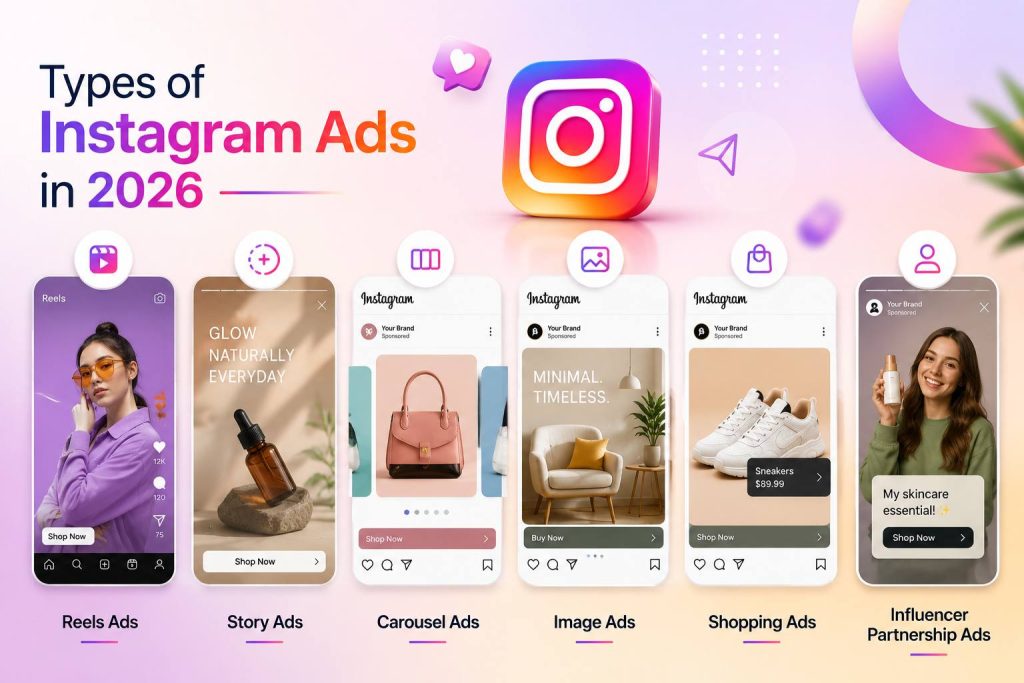
Reels ads are the dominant format right now. Short-form vertical videos (15–60 seconds) appear between organic Reels and command high engagement. The algorithm rewards watch time, so the first 2 seconds must hook immediately.
Full-screen, immersive, and gone in a swipe. Story ads work brilliantly for time-sensitive offers, quick demos, and direct-response campaigns. Add a clear swipe-up CTA and keep the message tight.
Let users swipe through multiple images or videos in a single ad unit. Ideal for showcasing product lines, before-and-after results, or feature walkthroughs. Carousels also tend to have lower CPCs due to higher engagement rates.
Don’t sleep on static images. For brand awareness and retargeting campaigns, a crisp, well-designed image with a punchy headline still converts. Mobile-first dimensions (4:5 or 1:1) are essential.
E-commerce brands, this is your weapon. Shopping ads let users tap a product tag and purchase without ever leaving Instagram. In 2026, Meta’s AI can dynamically show your catalog to people most likely to buy based on their browsing behavior.
Brands are increasingly amplifying creator content as paid ads. When a trusted voice promotes your product, conversion rates jump. In 2026, this format is growing fast — authenticity sells.
Meta’s advertising backbone is a sophisticated AI targeting engine that’s gotten significantly smarter.
Audience segmentation options include:
The Meta Pixel and server-side Conversions API track user actions (purchases, sign-ups, add-to-carts) and feed that data back into the algorithm, making campaigns smarter with every event fired. The more quality data you give Meta, the better it optimizes.
Automated campaign features like Advantage+ now handle placements, audiences, and even creative testing — reducing manual work while improving results for many advertisers.
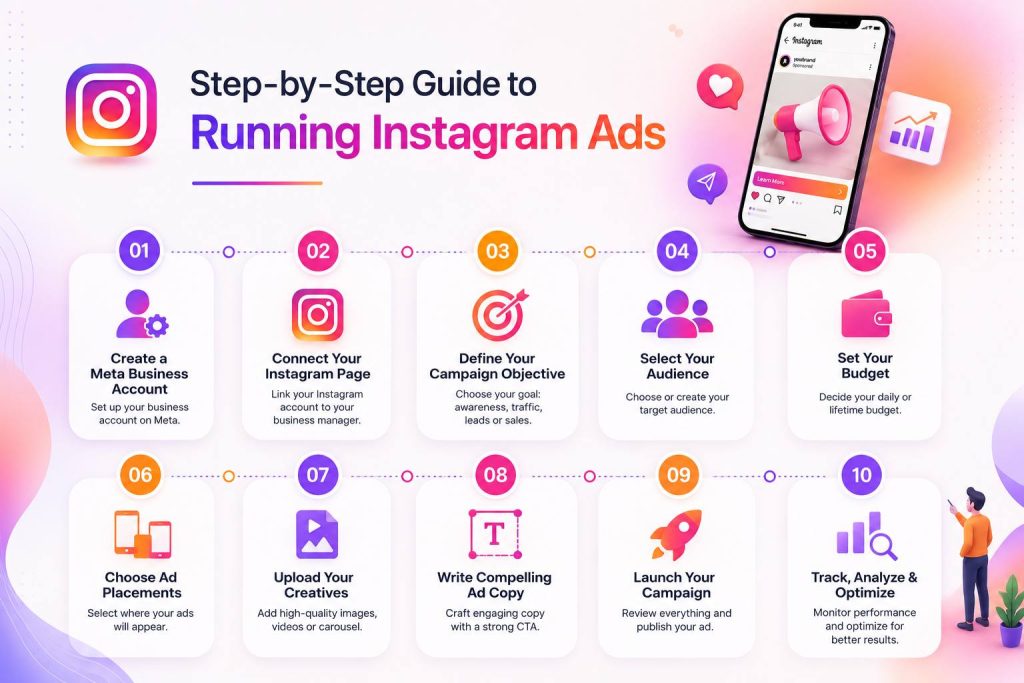
Give campaigns at least 3–5 days before concluding. Meta’s algorithm needs time to exit the learning phase.
These strategies are working right now and align with how Meta’s algorithm rewards content:
Instagram ad costs vary by industry, competition, season, and targeting quality. Here’s a realistic benchmark:
Tips to keep costs down:
The next evolution of Instagram advertising is already underway:
AI-driven personalization will make every ad experience feel custom-built. Meta’s systems are predicting purchase intent before users are even consciously aware of it. Augmented reality (AR) ads are growing — try-before-you-buy for beauty, fashion, and home decor is becoming mainstream. Interactive shopping within Reels and Stories will blur the line between content and commerce completely.
The creator economy will continue to shape how ads are made and delivered. Authentic, creator-led content will outperform corporate advertising across every vertical. And predictive targeting — powered by first-party data and AI — will allow brands to reach buyers at the exact moment they’re ready to convert.
Automated campaign management will handle more of the heavy lifting, but strategy, creative vision, and audience understanding will remain irreplaceable human contributions.
Instagram advertising in 2026 is a blend of art and algorithm. The platform rewards creativity, authenticity, and smart data use — and punishes lazy creatives, poor targeting, and brands that refuse to test and adapt.
This Instagram Ads Guide 2026 gives you everything you need to start strong: the right formats, targeting approach, step-by-step execution, and the strategies that are actually working today. Whether you’re a solo creator, a growing ecommerce brand, or a seasoned marketer looking to sharpen your edge, there’s never been a better time to invest in Instagram advertising.
Start with a small test budget, build on what works, stay creative, and keep optimizing. The brands winning on Instagram right now aren’t the ones with the biggest budgets — they’re the ones with the best ideas and the discipline to test them.
Ready to launch your first high-converting Instagram ad campaign? Start today — your next customer is already scrolling. —
Generate the next concept
Use the AI storyboard generator, connect Dilogs in Claude and ChatGPT, or check pricing.